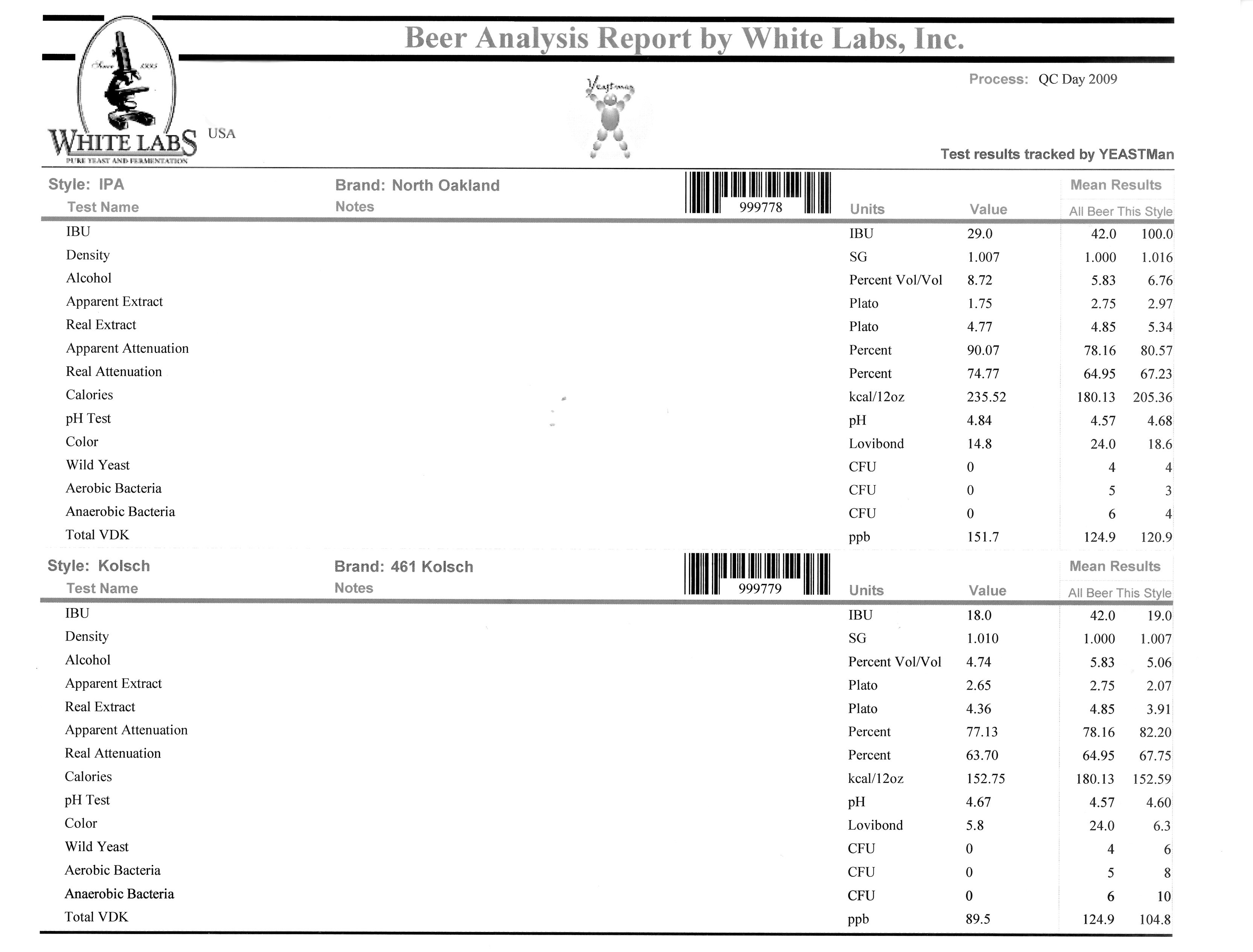
I read this post and was fairly interested in this and took a look at White Labs analytical methods. Here are a couple of notes on the science side of things:
nahthan wrote:
Ok, so the IPA definitely had diacetyl above the flavor threshold (100+ppb).
Not to throw White Labs under the bus or anything but I don't like the way they analzyed this (and quoted you to such accuracy). Headspace Gas Chromatograph (GC) injections introduce a lot of internal fluctuation. Not being familiar with this exact equipment model, a normal GC displays on average 10 % RSD on injections. Headspace is 20-25 % RSD. I expect that they use internal standards and things to fix this but I still have never worked with any headspace methods that display that much accuracy. Also, a large part of my job currently is to test for diacetyl by GC (not using headspace injections). Analysis is difficult due to a lot of interactions with diacetyl and internal instrument components. Your approach to this seems to be a good way to interpret this data i.e. Yes, diacetyl is in there in relatively high quantities but the specific quantity is not really reliable. (I guess I just disagree with them reporting it with an actual value and not a true/false type report or at least only report it to 2 sig figs not 4).
nahthan wrote:Interesting that the IPA showed up as 29IBU (way off from the "calculated" value in the recipe), not to think that the measuring accuracy was off because the Koelsch hit 18 IBU in the analysis while pro mash calculated that one at 19.6.
Again, not to throw White Wabs under the bus but this is a little suspiscious. Quantitative photoanalysis on photoreactive chemicals is very difficult. Basically what they did was shine a light through the samples and read how much light is absorbed by your sample. If if the process of shipping, sample receiving by the lab, sample prep, or pre-analysis, these samples were exposed to light, the photocatalytic reactions would begin. This means that there would be less absortion during analysis and cause a much lower reading than expected. Did you send your expected values in with your samples? I would think that if they knew what you were expecting it to be they would have investigated these numbers a bit. That's the problem with contract lab work is sometimes you get bad results and you just don't know.
Anyway, I hope this gives you a little insight into your data. Keep in mind I might be wrong with this since I don't know White Labs specific methods. I do know analytical chemistry though so those would be my general areas of concern.